
Being Sued for Trademark Infringement in Malaysia: What Should Your Company Do Immediately?
•

Written by
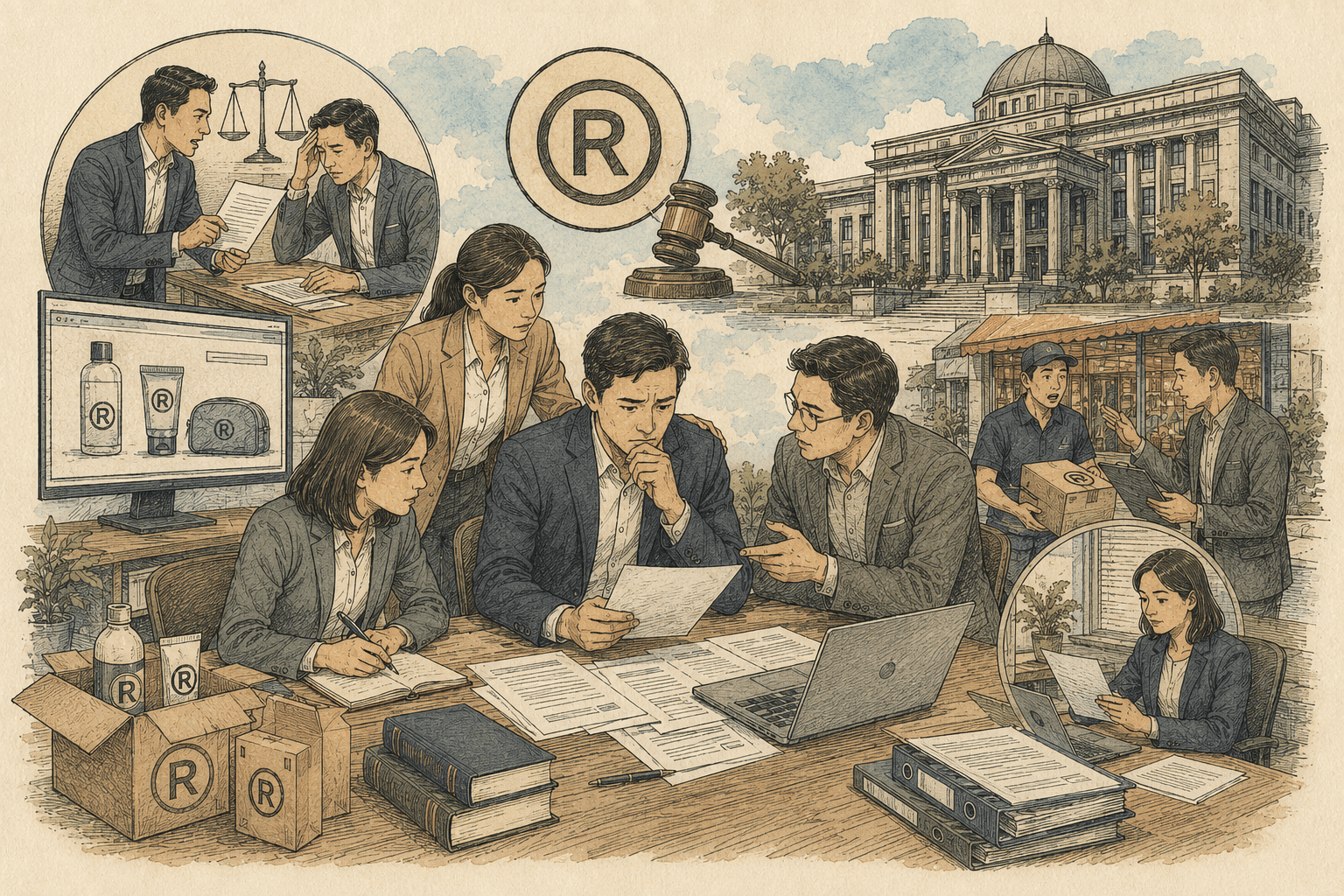
Court papers change the situation. A trademark cease-and-desist letter is an allegation. Once a writ, originating summons, injunction application or court order is served, procedural deadlines and evidential consequences enter the picture. The business now needs a coordinated defence, not just a commercial reply.
The first objective is simple: do not let confusion, fragmented communication or missing documents make the claimant’s case easier than it needs to be.
Confirm exactly what has been served — and when
Collect every document exactly as received. This may include a writ, statement of claim, originating summons, affidavit, notice of application, interim order, exhibit bundle, letter from the claimant’s lawyers or proof of service.
Do not assume that a pre-action deadline still governs. Court papers have their own procedural requirements, and the mode of proceedings matters. Malaysian Judiciary guidance states that a claim involving a substantial dispute of fact is commenced by writ; the parties then ordinarily develop their positions through pleadings. An originating summons is generally used where statute requires it, the dispute is principally about law or substantial factual disagreement is unlikely; it is ordinarily supported and answered by affidavit rather than pleadings. Judiciary guidance on civil procedures
Record:
the date, time and method of service;
the court and case number;
each defendant named;
the relief claimed;
every stated deadline;
any hearing date; and
any interim order or notice of urgent application.
Send the complete set to litigation counsel. A screenshot of only the first page is not enough. The statement of claim, affidavit, exhibits, endorsements and service documents may contain the information that determines what must happen next.
Escalate internally and appoint litigation counsel quickly
Once proceedings are served, the company should nominate a small decision group. Usually this includes a senior business decision-maker, the person who understands the brand and product history, the finance or operations lead who can quantify exposure, and legal counsel.
Other teams should avoid making substantive communications about the allegation — to the claimant, its lawyers, customers, distributors or platforms — without coordination.
This protects the quality of the defence. An informal reply may later matter. Different teams may give inconsistent descriptions of the brand, product or timeline. A well-meaning employee may take down a page before the evidence has been preserved. The court dispute and the business response need to be managed together.
Counsel can help coordinate the legal work and litigation strategy. But the company should not use the involvement of lawyers as a reason to hide inconvenient facts. Strategy is only as good as the account and documents provided. Our trademark litigation defence work starts by taking the served papers and the brand history together, because the procedural position and the factual record shape each other.
Preserve the evidence before anything changes
The company needs to preserve both the history of the disputed sign and the business activity around it.
That usually includes branding records, first-use documents, packaging, product photographs, websites, advertisements, social-media content, marketplace listings, invoices, sales information, distributor records, licences, franchise or agency agreements, internal approvals and earlier correspondence with the claimant.
Keep the claimant’s material too: letters, emails, screenshots, registration extracts, demand letters and records of platform complaints or customer contact.
Build a simple chronology as part of the preservation exercise. When did the company choose the name? Who approved it? When was it first used publicly? Has the branding changed? Were there overseas or group-company uses? When did the claimant first make contact? What happened after that?
A sensible operational decision may still be necessary. The business may need to pause a campaign, change a marketplace listing or stop a particular advertisement while advice is obtained. That is different from deleting the evidence.
Preserve the original material before anything changes. Capture full webpages with URLs and dates. Keep original files where possible. Record the reason, time and person responsible for any operational change. Do not backdate records, ask employees to clean up messages or recreate a chronology as though it were contemporaneous.
If there is an uncomfortable email or old packaging, counsel needs to see it early. Managing a difficult fact is part of litigation strategy. Discovering it after the company has already taken an inconsistent position is much harder.
Assess injunction risk immediately
An urgent injunction application may seek to restrain use of the disputed mark before the underlying dispute reaches trial. Its commercial effect can be substantial: sales, advertisements, online listings, inventory movement and brand use may all be affected.
That risk should be assessed against the business reality. What stock exists? Which contracts, campaigns or launches depend on the challenged branding? Are distributors or platforms already reacting? What temporary alternatives are available, and what would they cost?
Section 56(3) of the Trademarks Act 2019 provides that, in an infringement action, the Court may grant relief including an injunction subject to such conditions as it thinks fit, as well as damages or an account of profits. That does not make any particular urgent application automatic; the application still has to be dealt with on its evidence and under the applicable court procedure. Trademarks Act 2019 (Act 815)
The right emergency response is not always an immediate complete stop. Depending on the actual court papers and commercial position, the company may need to consider an interim operational step, evidence preparation, a request concerning timing, negotiations or opposition to the relief sought. That decision should be made with litigation counsel.
Test the claimant’s pleaded case element by element
A claim should be broken down, not absorbed as a conclusion.
What registered right does the claimant rely on? Is the claimant the registered proprietor or otherwise entitled to sue? What goods or services are covered? What sign is the company accused of using? In what form, for which goods or services, and through which channels?
Section 54 of the Trademarks Act 2019 sets out different statutory routes to infringement. Use of an identical sign for identical registered goods or services is treated differently from the similarity-based routes, where likelihood of confusion on the part of the public forms part of the statutory test. The pleaded allegation therefore needs to be tested against the route and facts actually relied upon. Trademarks Act 2019 (Act 815)
The defence should gather the documents that answer those issues. A logo alone may not show how the sign was used. A statement about customers may not establish the relevant sales channel. A registration extract does not, by itself, resolve every factual issue raised by the pleaded allegation.
Identify defence and counterclaim options without assuming they apply
Depending on the facts, defence counsel may need to consider matters such as prior and continuous use, consent or licence history, non-infringing use, the scope of the registered goods or services, the way the sign is actually used, and whether there is a proper basis to challenge or respond to the claimant’s asserted rights.
Section 55 contains defined circumstances in which use does not amount to infringement. Under subsection 55(2), qualifying continuous use of an unregistered mark may fall outside infringement where the required use began before the earlier of the registered mark’s registration date or the relevant first use by the registered proprietor, predecessor or registered user. The documentary chronology can therefore be decisive. Trademarks Act 2019 (Act 815)
A counterclaim or related challenge may be appropriate in some cases. In others, it can add cost and complication without improving the company’s position. The decision should follow a merits assessment and a clear commercial objective.
Quantify the commercial exposure
Litigation strategy needs numbers.
Identify revenue tied to the disputed branding, stock on hand, rebranding costs, contractual commitments, marketing spend, customer or distributor dependency, platform risk and management time. Include less obvious consequences: a delayed launch, regulatory approvals linked to labelling, investor communications, franchise arrangements or lost search visibility.
The legal question may be whether the claimant can establish infringement. The business question is what defending, settling, restricting use or rebranding would cost. Management needs both answers before choosing the next step.
Decide whether early settlement discussions help or hurt
Early settlement can be commercially sensible. It can also be premature.
It may help where a temporary standstill, phased adjustment, stock sell-off arrangement or limited undertaking would protect the business while reducing litigation cost and disruption. It may hurt where the company has not yet understood its evidence, where the claimant is using urgency to seek an overbroad concession, or where the business has not decided its own red lines.
Counsel can help assess the timing and terms. The point is not to avoid settlement. It is to negotiate from a position informed by the pleaded claim, the evidence and the commercial objective.
Prepare for the next procedural decision
Proceedings move through connected stages. A defence filing, affidavit evidence, any interim application, discovery or document production where applicable, witnesses and later case-management decisions should support a coherent theory of the case.
Do not treat each deadline as a separate administrative task. The position taken now can affect what evidence will be needed later and what settlement leverage remains.
The Malaysian Judiciary’s current guidance explains that the route of the proceeding determines whether the parties move through pleadings or affidavits. Counsel should confirm the actual steps and deadlines from the documents served, the applicable rules and any court directions in the particular case. Judiciary guidance on civil procedures
Frequently asked questions
How long do we have to respond once court papers are served?
That depends on the mode of proceedings, the documents served and any court directions. Do not work from the deadline stated in an earlier demand letter — it has no bearing on the court timetable. Have counsel confirm the applicable steps from the papers themselves.
Can our company represent itself?
A company in Malaysian civil proceedings ordinarily acts through solicitors rather than a director or employee. Assume representation is required and confirm the position with counsel immediately.
Should we take the disputed branding down straight away?
Not before the evidence is preserved. Capture the full pages, packaging and listings with dates first. A commercial pause may still be sensible afterwards, but record what changed, when and why.
Does settling now look like an admission?
Not necessarily, but it depends on how the terms are drafted. A commercial compromise and a legal concession are different things, and an undertaking can bind the business long after the dispute ends. Take advice on the wording before agreeing anything.
What to prepare before contacting Legal That Works
Prepare the complete court papers, service details and deadlines, earlier correspondence, relevant trademark records, a brand-use chronology, key contracts, evidence of actual use, stock and revenue information, and a short explanation of the operational impact. If an injunction is threatened, a hearing date is listed or a court order has already been made, identify that first.
Once proceedings have been issued, generic online guidance is no longer enough to determine the company’s actual procedural and substantive position. Our trademark litigation defence service covers the assessment, the evidence work, the injunction response and the High Court defence itself — send the served papers, the service date and the next known deadline or hearing date and we can confirm whether and how we can assist.
This article provides general information on Malaysian trademark litigation as verified on 16 August 2026. It is not legal advice and does not create a solicitor-client relationship. Court procedures, deadlines, remedies and strategy depend on the actual documents, applicable rules, court directions and facts.
Related guides
Disclaimer
The content provided on this website is intended for general informational and educational purposes only. It does not constitute legal advice, nor should it be relied upon as a substitute for professional consultation with a qualified lawyer. Every legal matter is unique, and you are strongly encouraged to seek tailored legal advice from a licensed legal practitioner before taking any action based on the information available here.
While we endeavour to ensure the accuracy and timeliness of the content, ASCOLAW and its affiliates make no representations or warranties of any kind, express or implied, about the completeness, accuracy, reliability, suitability or availability of the information contained on this website. Any reliance you place on such information is strictly at your own risk.
Author
AKMAL SAUFI MOHAMED KHALED
Managing Partner & Founder
Practice Area
Litigation & Dispute Resolution
Commercial
Business Function
Related Post
Being Sued for Trademark Infringement in Malaysia: What Should Your Company Do Immediately?
Can You Ignore a Trademark Cease and Desist Letter? Risks for Malaysian Businesses
Groundless Threats of Trademark Infringement Proceedings in Malaysia: What Businesses Should Know
How Much Does a Trademark Infringement Lawyer Cost in Malaysia?
How to Prepare a Trademark Infringement Evidence Pack for Your Lawyer
How to Respond to a Trademark Infringement Allegation in Malaysia
Trademark Infringement Defence in Malaysia: How a Lawyer Can Challenge the Claim Against You
What Defences Are Available in a Trademark Infringement Claim in Malaysia?
What Should You Ask a Trademark Litigation Lawyer Before Appointing Them?
